
FAQ
Frequently asked questions
What is the difference between epoxy and PU flooring?
Epoxy offers better hardness, abrasion resistance and chemical resistance, but lower flexibility and less ability to bridge substrate movement than PU. PU floors are more elastic and tolerate thermal movement better, suiting facilities with temperature variation or requiring some resilience, such as cold stores and food plant washdown areas. General factories, car parks and cleanrooms are predominantly epoxy.
What condition does the substrate need to be in?
Three factors: moisture content, flatness and strength. Epoxy is highly sensitive to moisture, and an over-wet substrate leads to blistering and delamination. Dusting surfaces, oil contamination or failed coatings must be ground off or removed. Areas of low strength, cracking or honeycombing should be made good with repair materials first. This preparation takes a significant share of the programme, and cannot be skipped.
How thick should the floor be?
It depends on loading and use. Light office use is served by a thin-build topcoat; factories with forklifts, racking or heavy vehicles need body coat thickness as the priority, built up to 1–3 mm in stages or above 4 mm with high-filler grades. Insufficient thickness leads to crushing or delamination at load points.
How long does the facility need to close?
It depends on the system and area. Thin-build systems have the shortest programme; self-levelling and anti-static systems involve more layers, each requiring cure time, so take longer. In practice work is usually phased so the facility can remain partly operational. Cure times must be built into the programme — compressing intervals to save time is a frequent cause of failure.
Our underground car park is poorly ventilated. Is there a suitable material?
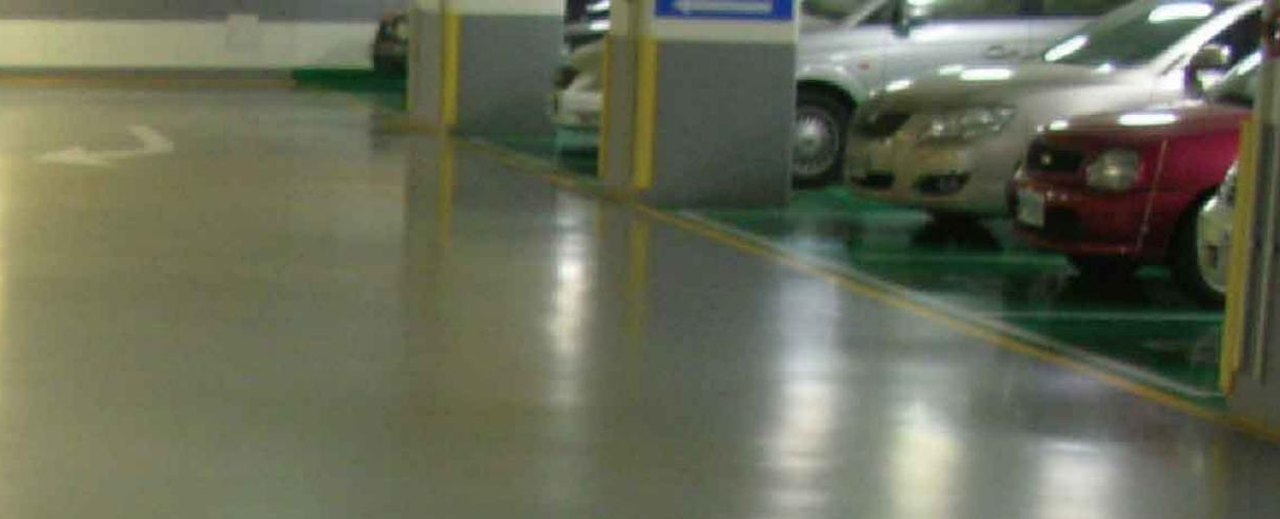
Yes. Water-based epoxy systems have no VOC and low odour, making them the first choice for ventilation-limited spaces. Note that water-based epoxy is more sensitive to temperature and humidity; application below 10°C is not recommended, and ventilation should still be confirmed during installation.
Do food plants have particular requirements?
Food plants are among the most demanding environments, combining hot washdown, fats, organic acids and frequent cleaning. Thermal and chemical resistance specifications should be confirmed explicitly, and a seamless self-levelling system is preferred to reduce contaminant adhesion. Falls to drainage and detailing around gullies should be planned at the same time.